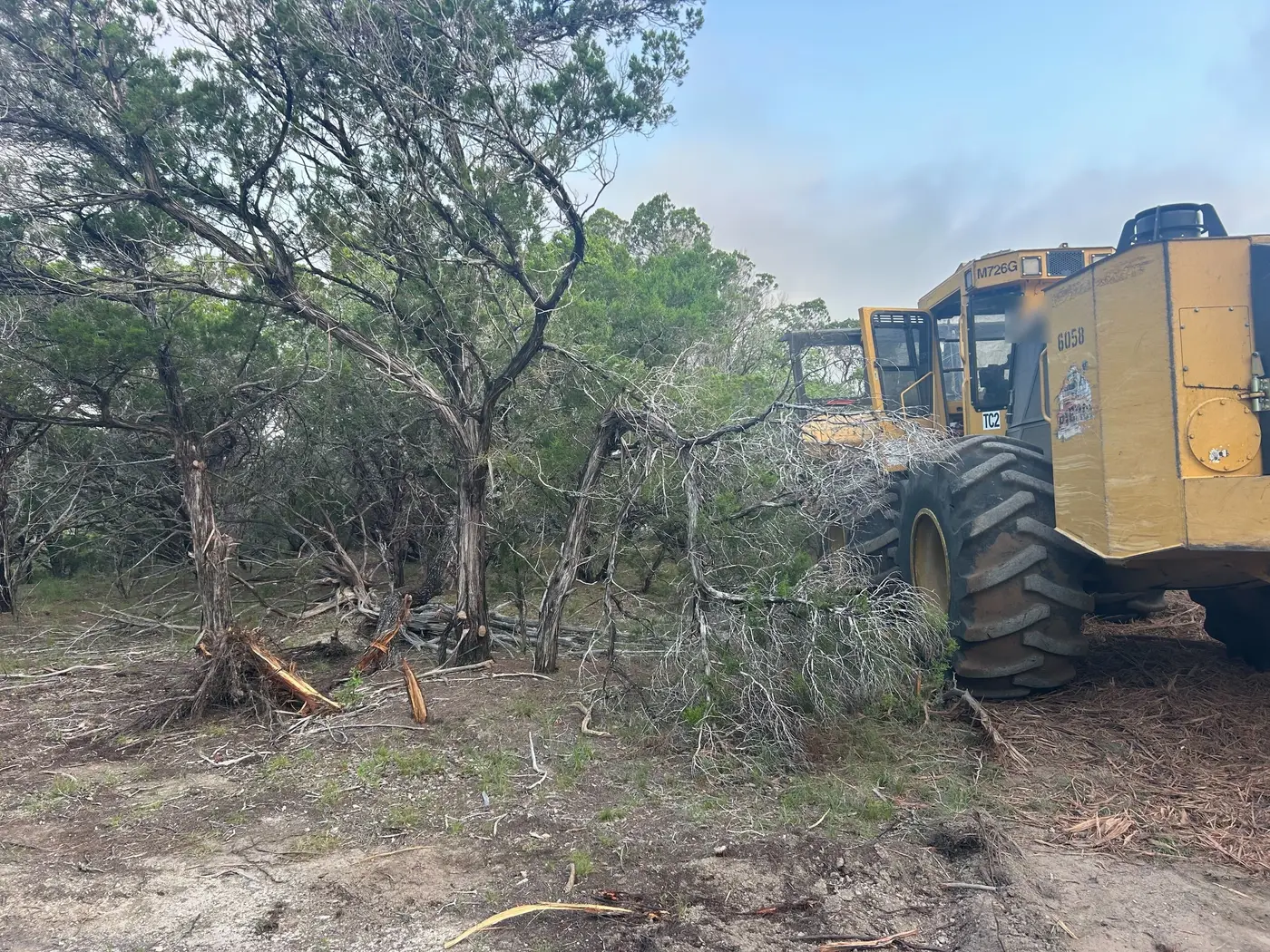
Why cedar takes over
Birds eat cedar berries and drop the seed along every fence and across every field they fly over. A pasture that is not mowed or grazed hard for a few years fills with cedar seedlings, and within a decade it can be a thicket that shades out the grass.
Cedar likes the thin, limestone soils found across much of Kentucky, which is why rocky pastures and hillsides grow up in it first.
The good news about cedar
Unlike honeysuckle, eastern red cedar does not resprout from the stump. Once it is cut below the lowest branch it is dead. A cedar job mulched properly stays cleared, and the only thing that comes back is new seedlings, which regular mowing or grazing keeps down.
Small cedar versus big cedar
Cedars up to about 10 inches across are skid steer mulcher work at $3,200 a day with transport included. A stand that has been growing for decades, with trunks bigger than that, needs the dedicated high horsepower mulcher at $5,500 a day plus transport. Photos of the biggest trees tell us which one you need.